ELCHE CF · HISTORY

A century of franjiverde history

From the club's birth in 1923 to Primera División, a cup final, World Cup football and generations of supporters at Estadio Martínez Valero.

1923 · Club founded1959 · Primera División1976 · Estadio Martínez Valero

Since 1923

One green stripe. An entire city.

Elche CF's history is not a straight road upwards. It is the story of a club that has known how to get back up, time and again.

From a fireworks workshop beneath the palms to Primera División, a Copa final at the Bernabéu, financial crises, Segunda B… and another new beginning.

1923Foundation
1959First time in Primera
1969Copa final
1976Estadio Martínez Valero
Explore the history

A club born from the city

Elche CF was born from a popular desire for a team that could represent the whole city. Representatives of local clubs met at Vicente Albarrach's fireworks workshop and, in 1923, Elche Football Club was born. The first match, in Monóvar, ended 4–0.

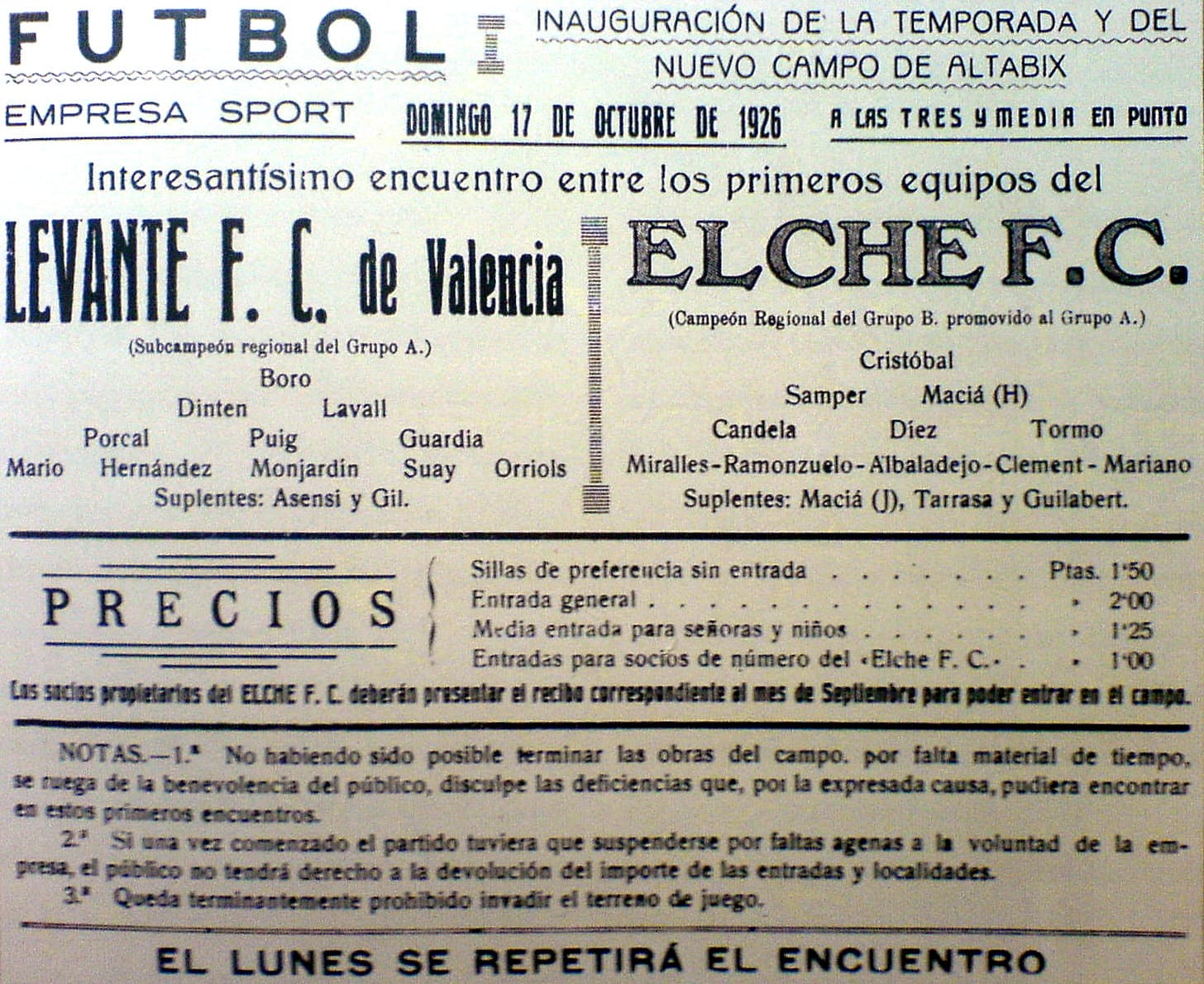
During its early years Elche played entirely in white. Then Czech coach Anton Fivber arrived and added the horizontal green stripe. Altabix opened in 1926, the home that would accompany the club through its great era.

The most important achievement of the first three decades was not a league position. It was that Elche became its city's team.
When the players saved the club

The financial situation came to threaten Elche's future. Then La Cooperativa was born. Players and people around the club jointly took responsibility for keeping it alive, both sporting and financially.

The footballers did far more than play. They helped with administration, accounts and practical work. The club survived. A few years later, that same Elche would reach the top flight.

Whenever Elche has been close to the bottom, someone has almost always stepped forward to stop the club from disappearing.

Two years. Two promotions. Primera.

With former Barcelona player César Rodríguez as player-coach, Elche truly accelerated. In 1957/58 the team scored 147 goals and won promotion from Tercera to Segunda.

On 19 April 1959 Elche won 0–3 in Tenerife. For the first time, the club was in Primera División. In just two seasons it had gone from the third tier to the elite of Spanish football.

From Tercera to Primera in two seasons. Elche's golden age had begun.

When Altabix became a fortress

The first home game in Primera could hardly have been tougher: FC Barcelona visited Altabix. Elche won 2–1. During the 1960s the club established itself among the best and in 1963/64 achieved its highest-ever league finish: fifth.

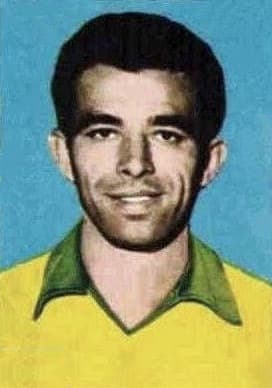
Vavá won the Pichichi in 1965/66. Three years later came the club's biggest cup occasion: the 1969 final at the Santiago Bernabéu. Around 20,000 Elche supporters travelled to Madrid. Athletic Club won 1–0, but Elche had already made a national mark.

Elche was no longer a small club trying to survive among giants. It had become one of them.

A new home

Altabix had become too small and increasingly enclosed by a growing city. Elche bought the Lo Valero site and began building a stadium for a new era.

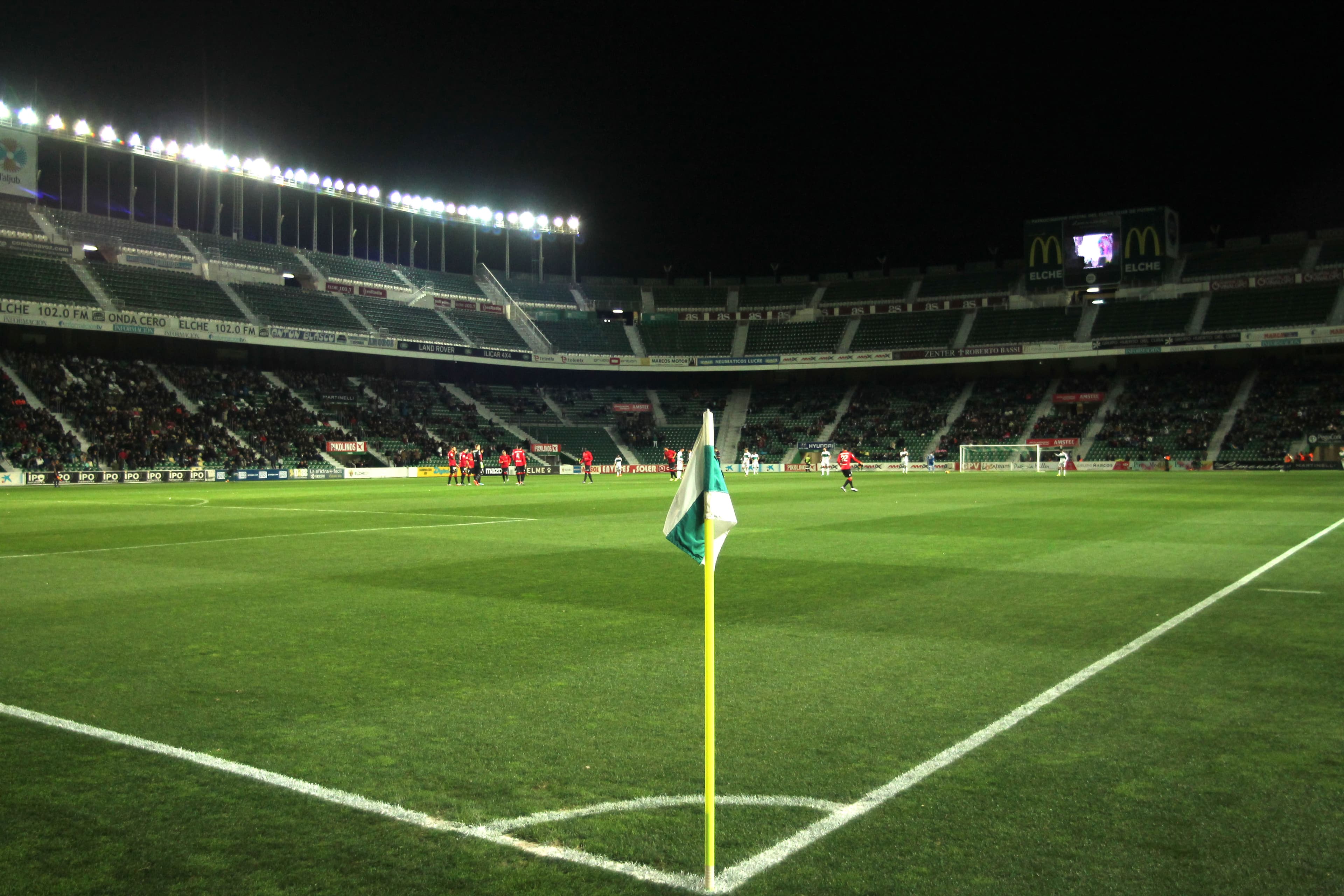
On 8 September 1976 the new stadium opened against the Mexico national team. The match ended 3–3. The ground would later take the name Estadio Martínez Valero and host matches at the 1982 World Cup.

Altabix built the history. Estadio Martínez Valero became the place to keep writing it.

The lift, the crises and Nino

The 1980s and 1990s were a roller coaster. Elche won promotion to Primera, went down, returned and eventually fell to Segunda B in 1991. At the same time, the finances again became so fragile that the club's disappearance was openly discussed.

Elche survived again. In 1999, during the playoff against Melilla, a young Nino appeared to score the 2–1 winner in the 93rd minute. The team returned to Segunda and a modern icon began writing his story.

It was not glamorous. It was Elche: fall, rise and start again.

24 years of waiting… then the blow

Fran Escribá's Elche led Segunda in 2012/13 from the first round to the last. After 24 years of waiting, the club returned to Primera.

Two seasons later it secured survival on the pitch, but was administratively relegated after 2014/15. One of the hardest blows in the club's modern history had nothing to do with the league table.

Elche had done enough on the pitch. Even so, it had to start again.

Come back. Again. And again.

In 2017 Elche fell to Segunda B. With Pacheta on the bench it returned to Segunda just one year later. In 2020 came another dramatic chapter: Pere Milla decided the playoff against Girona and sent the club back to Primera.

In 2025 it did it again. Promotion meant Elche's 25th season in the top flight, more than a century after that meeting in the fireworks workshop.

Elche's history has never been a straight line. That is precisely why it means so much.

One stripe. One city. A story that continues.

¡Mucho Elche!
About this history

The story is based on Elche CF's official historical archive. The text has been editorially adapted for Elche Scandinavia. Images come from Wikimedia Commons and are used under their respective licences.

Elche CF historical archive ↗

Sweden · Norway · Denmark

The Scandinavian connection

Players, coaches, executives, academy prospects and unexpected paths between Elche CF and Scandinavia.
Explore the connections →